After our first day in Athens, it was time to leave the big city behind and begin our road trip through the Peloponnese. But before we set off around the mainland, we had planned a small detour to Hydra. We would only be there for one night – and it turned out to be one of the most relaxing parts of the entire journey.
From Athens to Piraeus
On Friday, 4 September 2026, we left Athens and drove to the port of Piraeus.
We had rented a car for our Peloponnese road trip, but the car wasn't coming with us to Hydra – there would be no use for it on an island without cars. Instead, we left it in the underground car park at Karaiskaki Square in Piraeus.
That worked really well for us. From the car park it was only about 600 metres to the ferry, so we simply grabbed our bags and walked the last stretch.
We had booked our tickets in advance through Ferryhopper. Our boat was the Hellenic Seaways AERO 5 HIGHSPEED, departing Piraeus at 08:30 and arriving in Hydra at 09:45 – just 1 hour and 15 minutes. A standard adult seat cost €42.
As we pulled out of Piraeus, the mood changed almost immediately. Athens disappeared behind us, and ahead lay a completely different kind of experience: a small Greek island where we'd spend just over twenty-four hours.
Our ferries at a glance
| Route | Boat | Time | Price |
|---|---|---|---|
| Piraeus → Hydra Fri 4 Sept | AERO 5 HIGHSPEED | 08:30–09:45 1 hr 15 min | €42 |
| Hydra → Piraeus Sat 5 Sept | AERO 4 HIGHSPEED | 07:30–09:20 1 hr 50 min | €32 |
Operator: Hellenic Seaways. Prices are per adult, standard seat, booked through Ferryhopper. Crossing times vary depending on the number of stops on the route.
Good to know before you board
- Online check-in is required. It opens 48 hours and closes 2 hours before departure – don't leave it until you're at the port.
- Arrive early. The ferry company asks passengers to be at the port at least an hour before departure (this matters most if you're travelling with a vehicle).
- Leave the car on the mainland. We used the underground car park at Karaiskaki Square in Piraeus, about a 600-metre walk from the ferry – easy, even with luggage.
Arriving in Hydra
The contrast with Athens was obvious the moment we arrived.
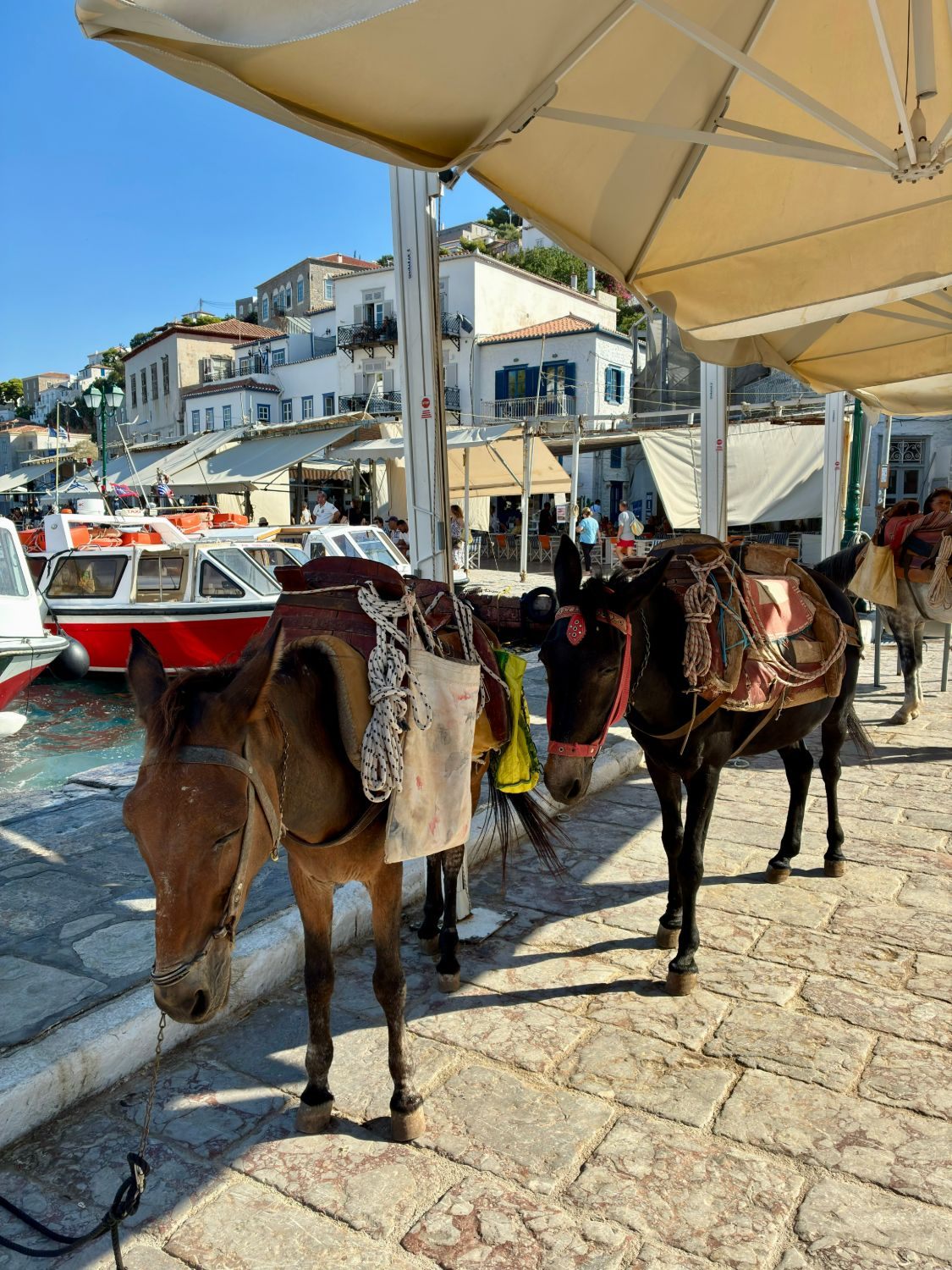
Hydra is car-free, and you feel it straight away. No cars squeeze through the narrow streets. Instead, people get around on foot, while donkeys carry luggage, groceries and building materials up the hillsides.
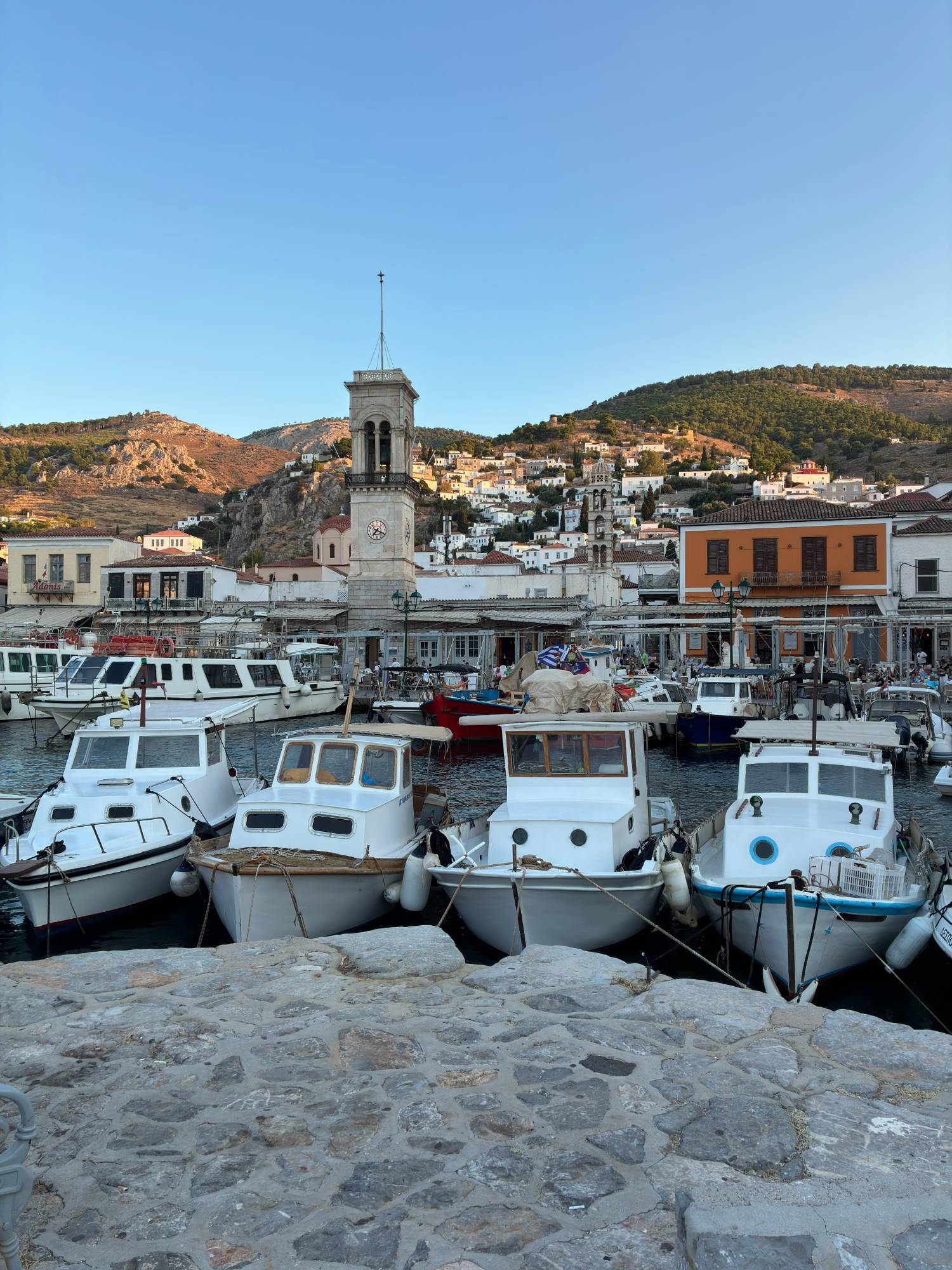
The harbour is the heart of life on Hydra. Small boats are moored side by side in front of restaurants, cafés and shops, while white and grey-stone houses climb the slopes behind the town.
The first thing we noticed was the atmosphere. Hydra felt slow – in the best possible way. After Athens, it was like someone had turned the tempo down the moment we stepped off the boat.
Where we stayed: Haven
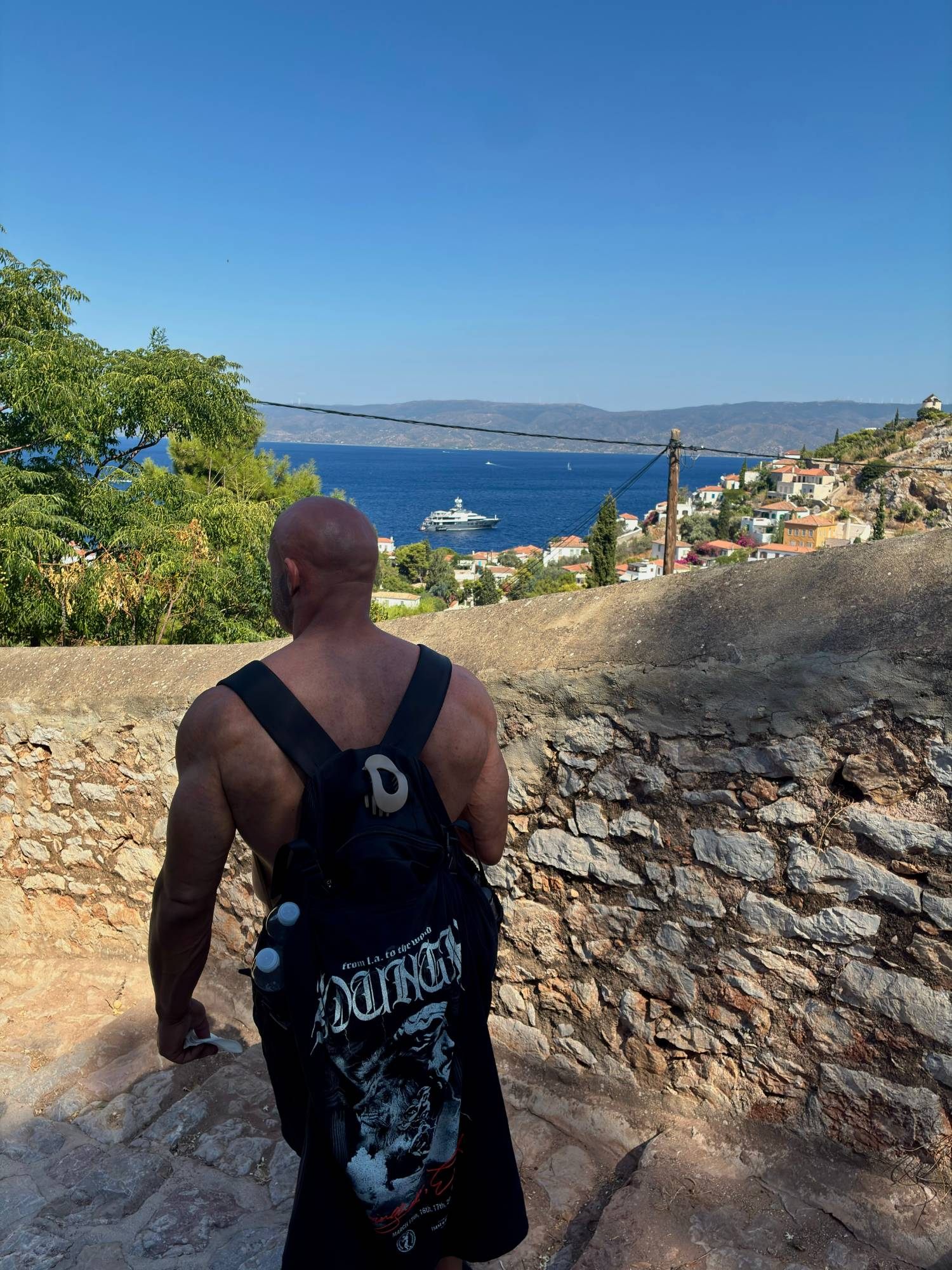
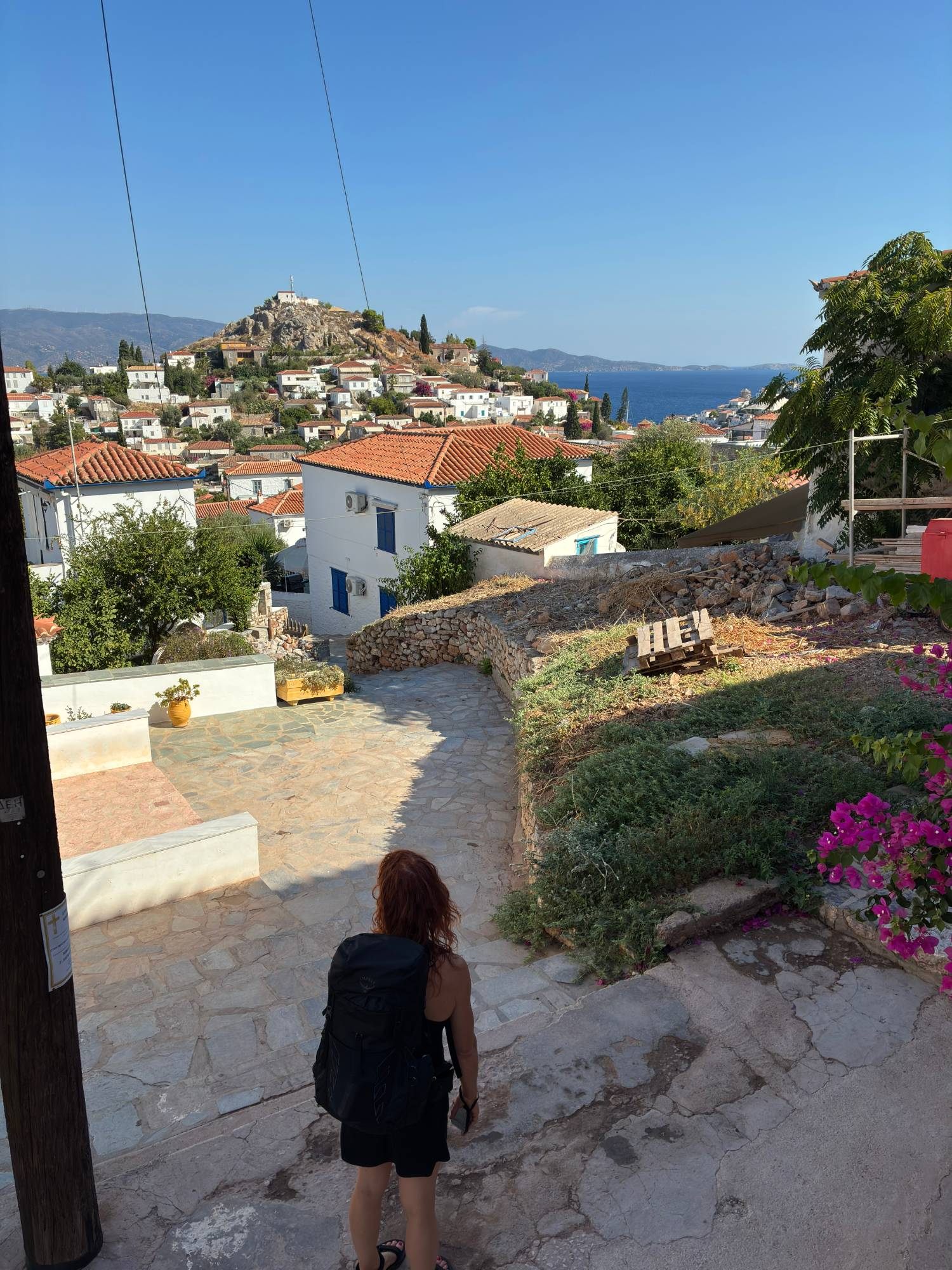
We had booked a night at Haven, about a kilometre from the harbour. Getting there meant walking up through the town and on up the hillside.
It's not the easiest location if you're arriving with luggage – there's quite a climb. But in return we got a fantastic view, and being further from the harbour also made it cheaper than many of the options right by the waterfront.
Once we'd settled in, we had no fixed plan. We just wanted to walk.
Staying up the hill vs. by the harbour
- Up the hill: better views, quieter, usually cheaper – but expect a steep walk with your bags.
- By the harbour: right in the action and close to the ferry, but typically pricier and busier.
Hydra is best explored on foot
One of the things we loved most about Hydra was simply not being in a hurry.
We wandered through the town, along narrow stone lanes and out along the coast. There was no car to get back to. No parking space to find. No schedule to keep. Just a day on the island.
Hydra is one of those places where walking around is the experience. You pass small houses, old stone walls, cats, donkeys and little paths – and around every corner a new view of the sea opens up.
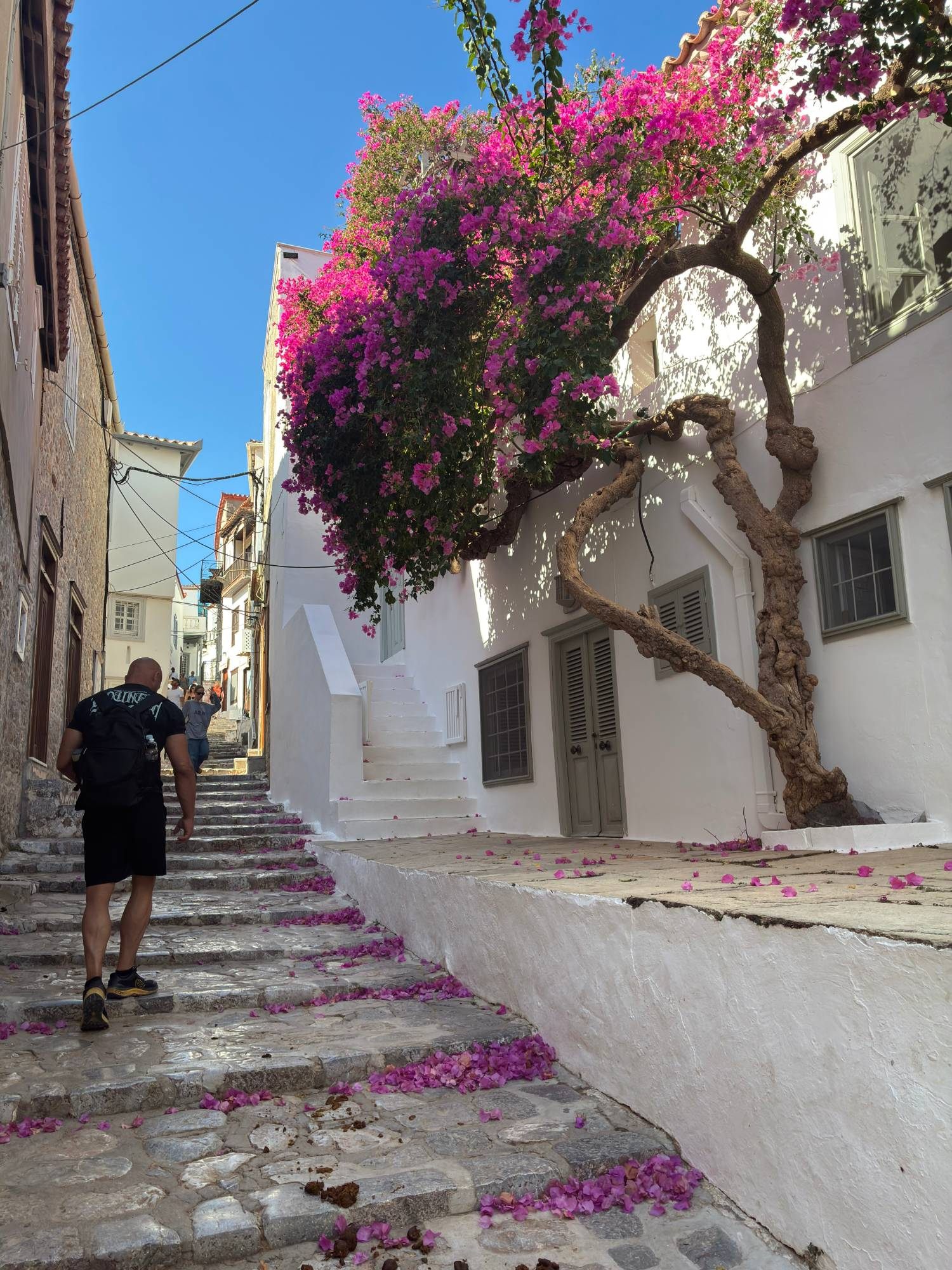
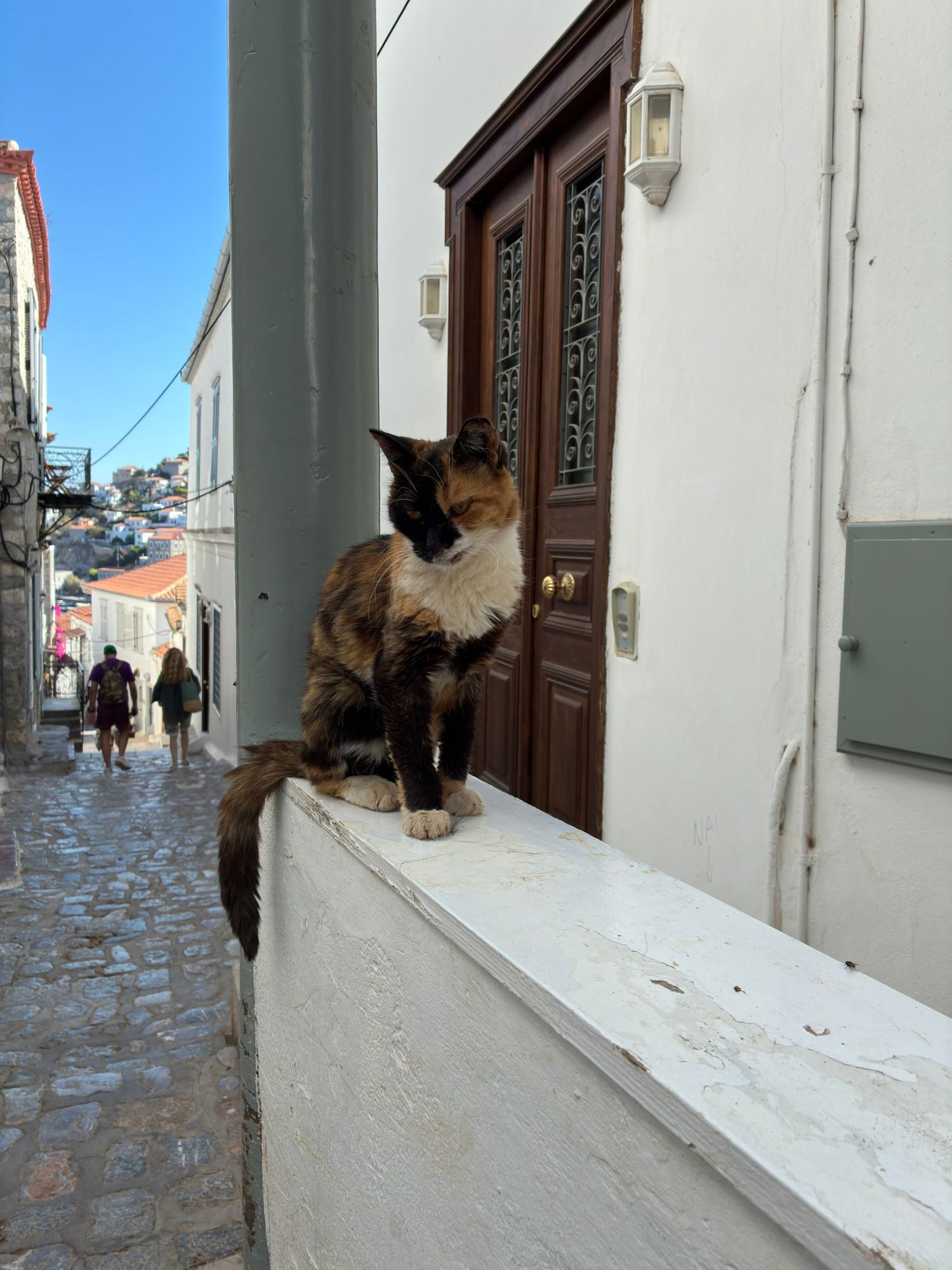
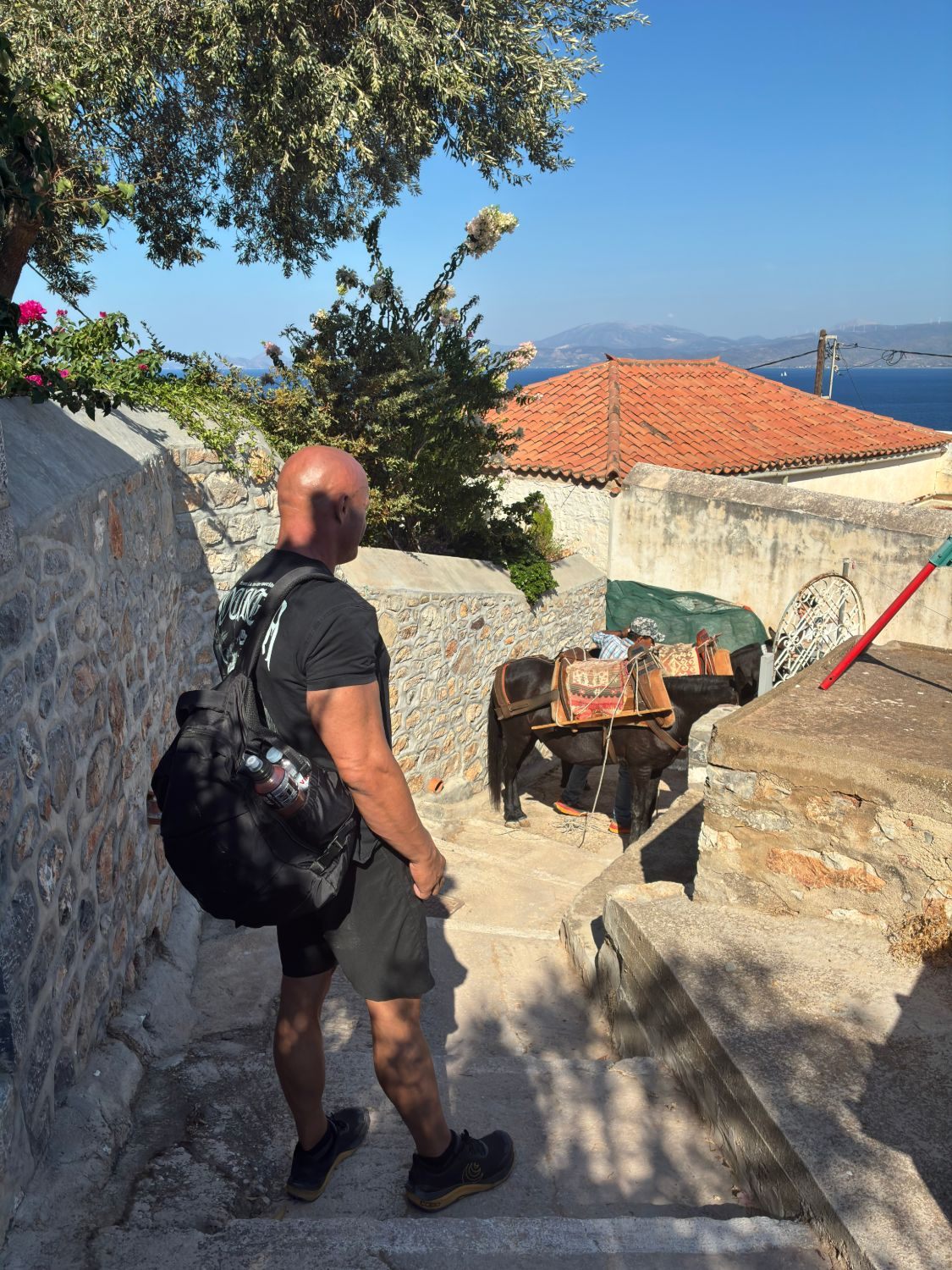
The coastal walk to Vlychos
We decided to follow the coast west towards Vlychos. The walk from Hydra Town took about 25 minutes along the shoreline to Vlychos Beach.
Vlychos was livelier – restaurants, sunbeds and plenty of beach life. On that particular day, it wasn't quite what we were looking for. We really just wanted a quiet place to swim.
So instead of stopping, we kept going.
Beyond Vlychos: an almost deserted swimming spot
That turned out to be a very good decision.
We continued past Vlychos along the coast, past Taverna Marina and on towards the area around the small church of Agios Charalambos. Here the surroundings changed. It grew quieter.
And then we found exactly what we had been hoping for.
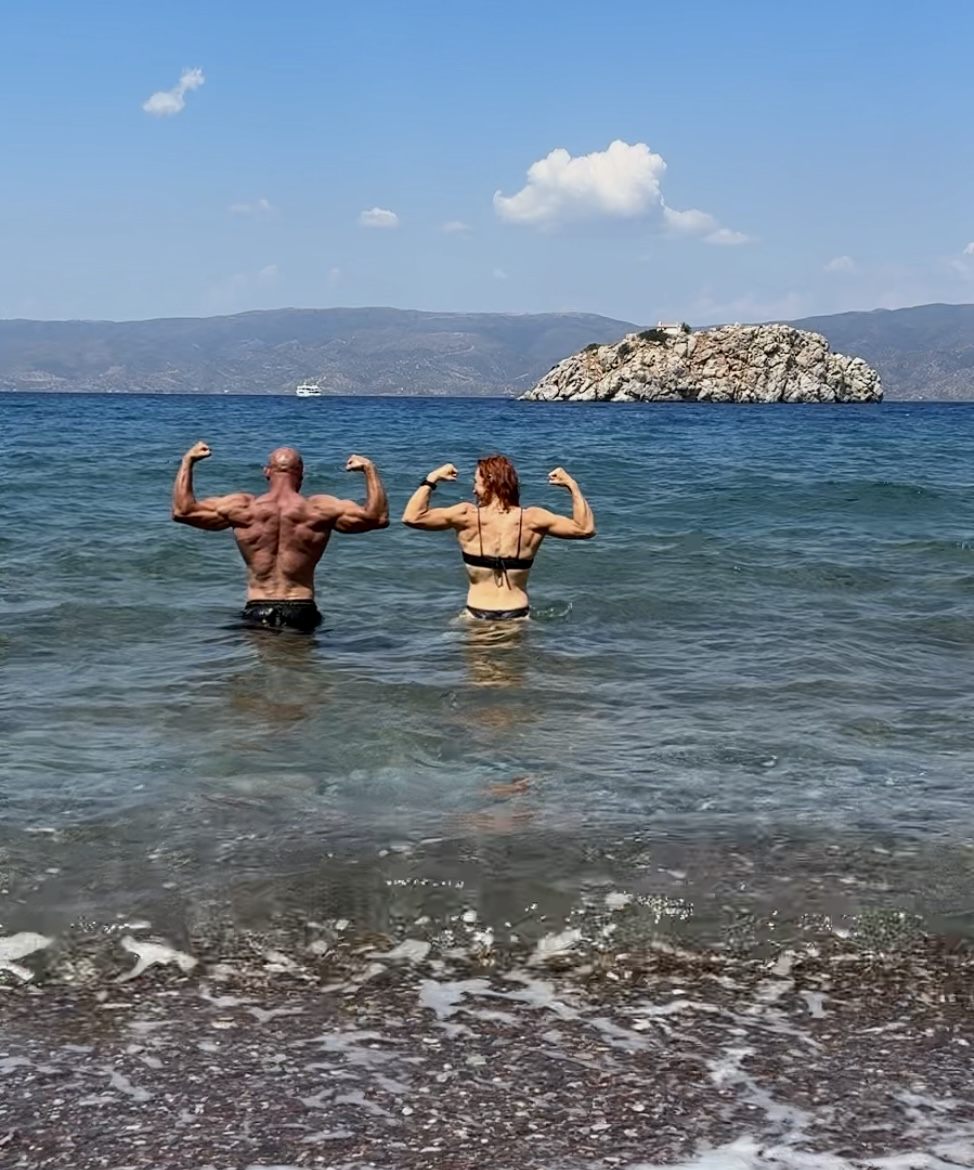
It wasn't a classic Greek beach with sunbeds, beach bars and crowds. It was a small spot among the rocks, with stones at the water's edge – and we had it almost to ourselves. To reach the water, we followed a little path down and scrambled over some uneven rocks.
This is exactly the kind of place you won't necessarily find by searching for "the best beaches on Hydra". We found it because we kept walking.
We swam for about an hour and a half. The water was clear, and the view across the sea to the mountains on the other side was incredible. It was precisely the kind of swim we had been looking for: somewhere away from the crowds, where we could simply be. It's one of the moments we remember most from Hydra.
We found it because we kept walking.
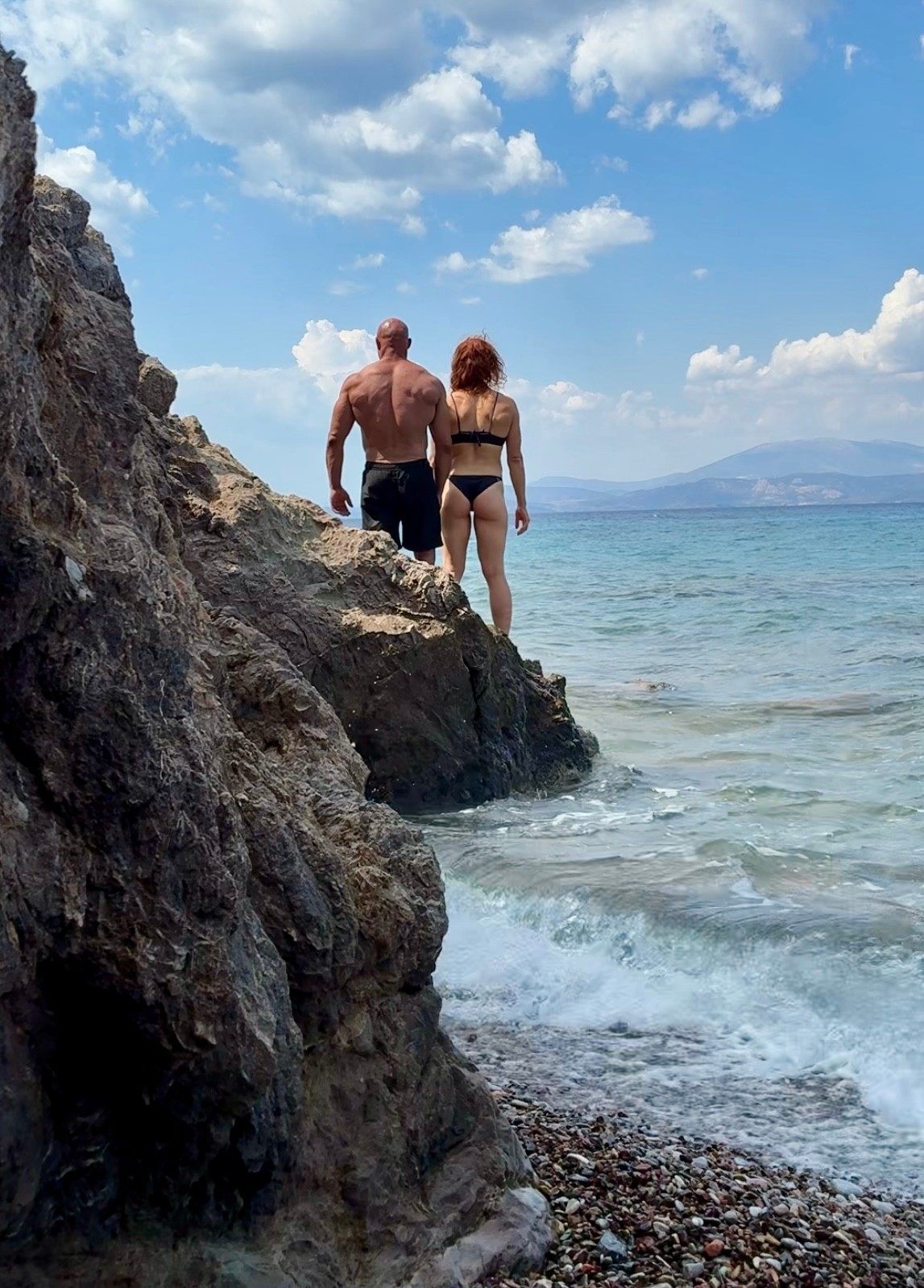
Tip: bring water shoes
If you want to swim from Hydra's more natural, rocky coastline, water shoes make a big difference. There are small stones and rocks at the water's edge – it's nothing like wading in from a sandy beach.
Lunch at Taverna Marina
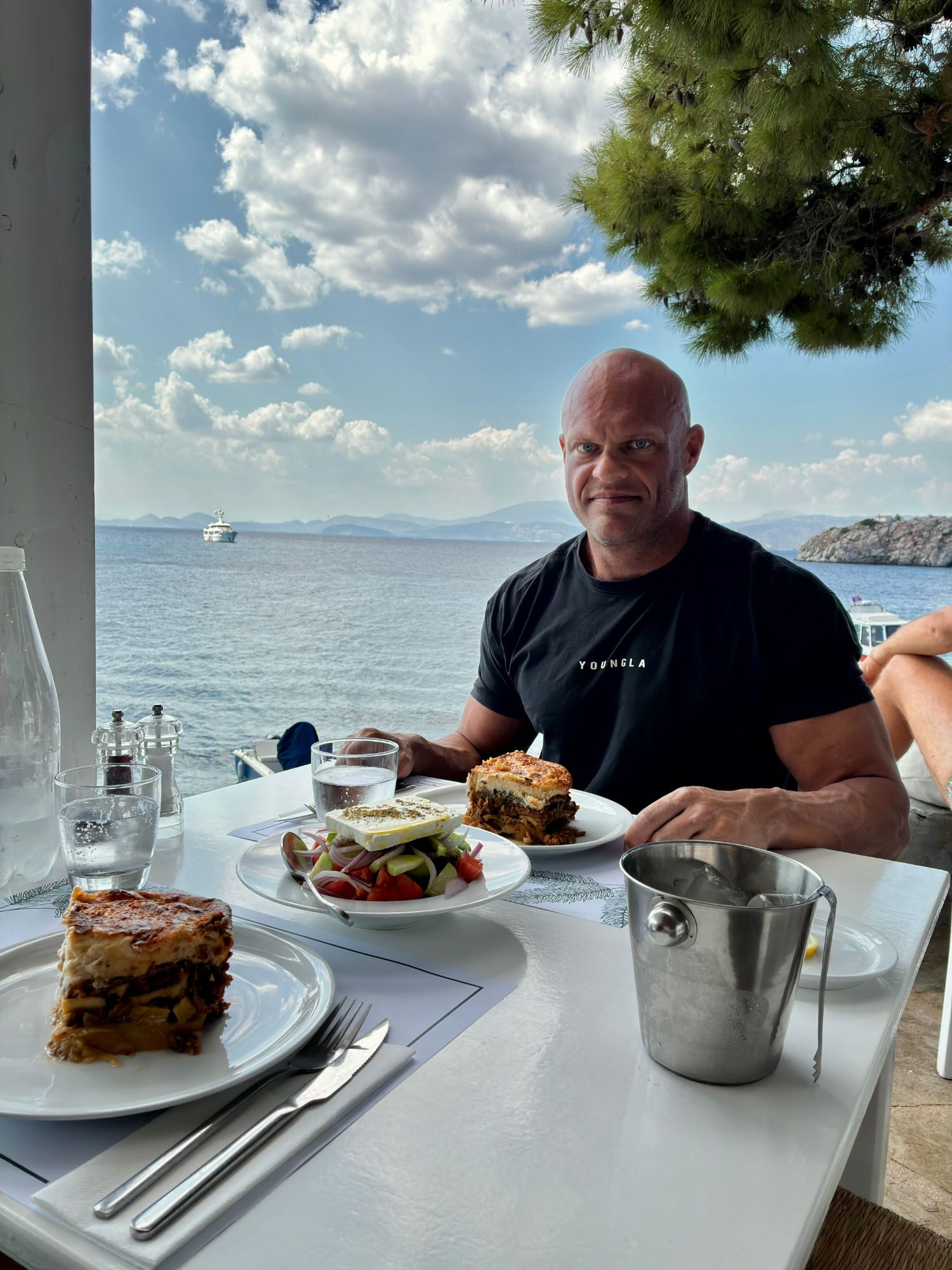
After our swim, we walked back towards Vlychos and had lunch at Taverna Marina.
The restaurant sits right on the water, and the view turned lunch into an experience in itself. Among other things, we ordered moussaka – exactly the kind of lunch you hope for on a Greek island. Good local food, the sea right beside you and no reason to rush on.
After the coastal walk and the swim, it felt great to just sit down and take our time.
Back through Hydra
After lunch, we headed back towards our accommodation – not necessarily the same way we came. That's another of Hydra's joys: you can simply wander and explore.
Along the way, we met some of the island's donkeys again. They're a very visible part of everyday life on Hydra, around the harbour and in the narrow lanes alike, and they quickly become something you associate with the island.
Evening in Hydra Town
Later in the day, we walked back down to the harbour.
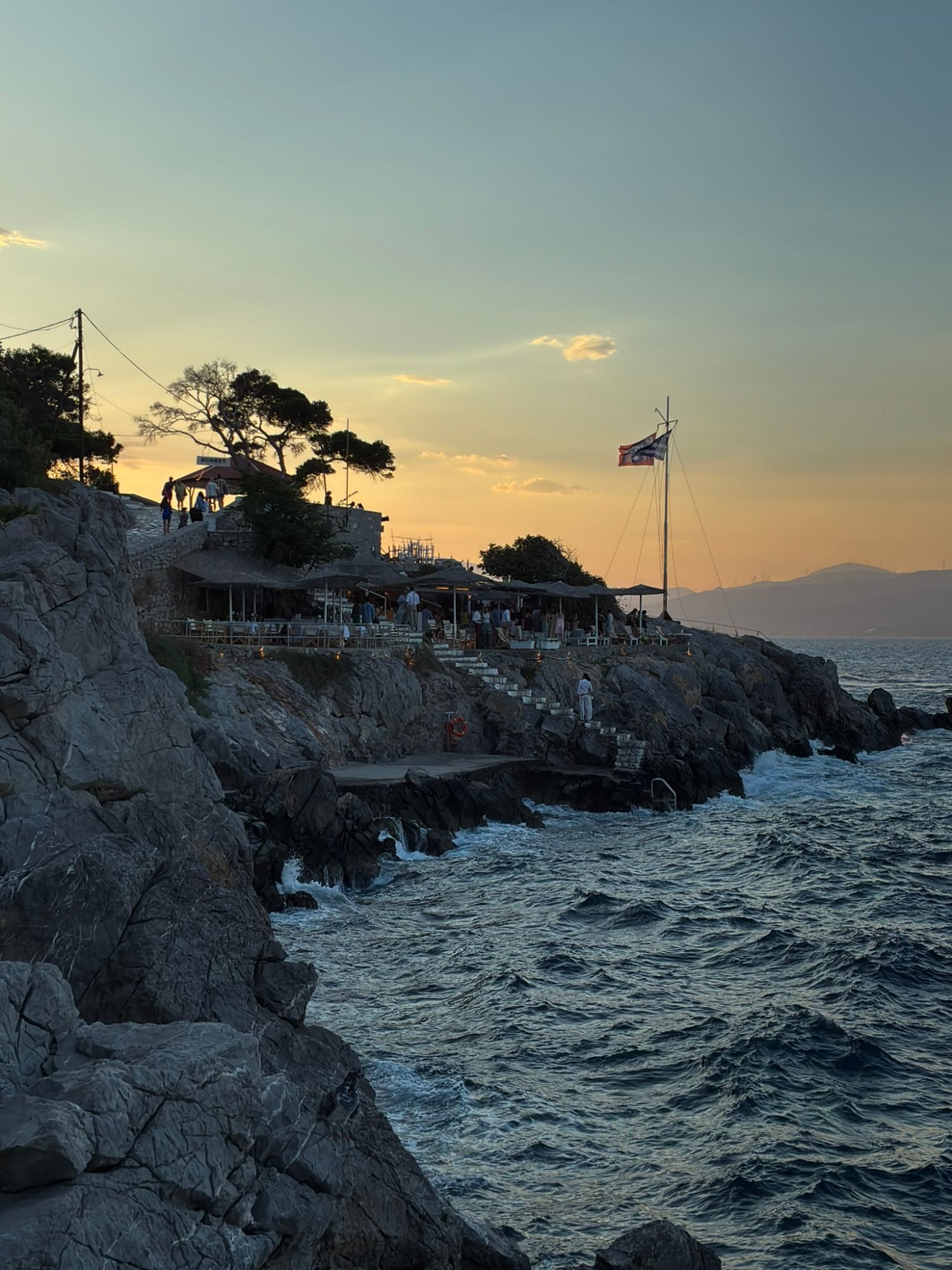
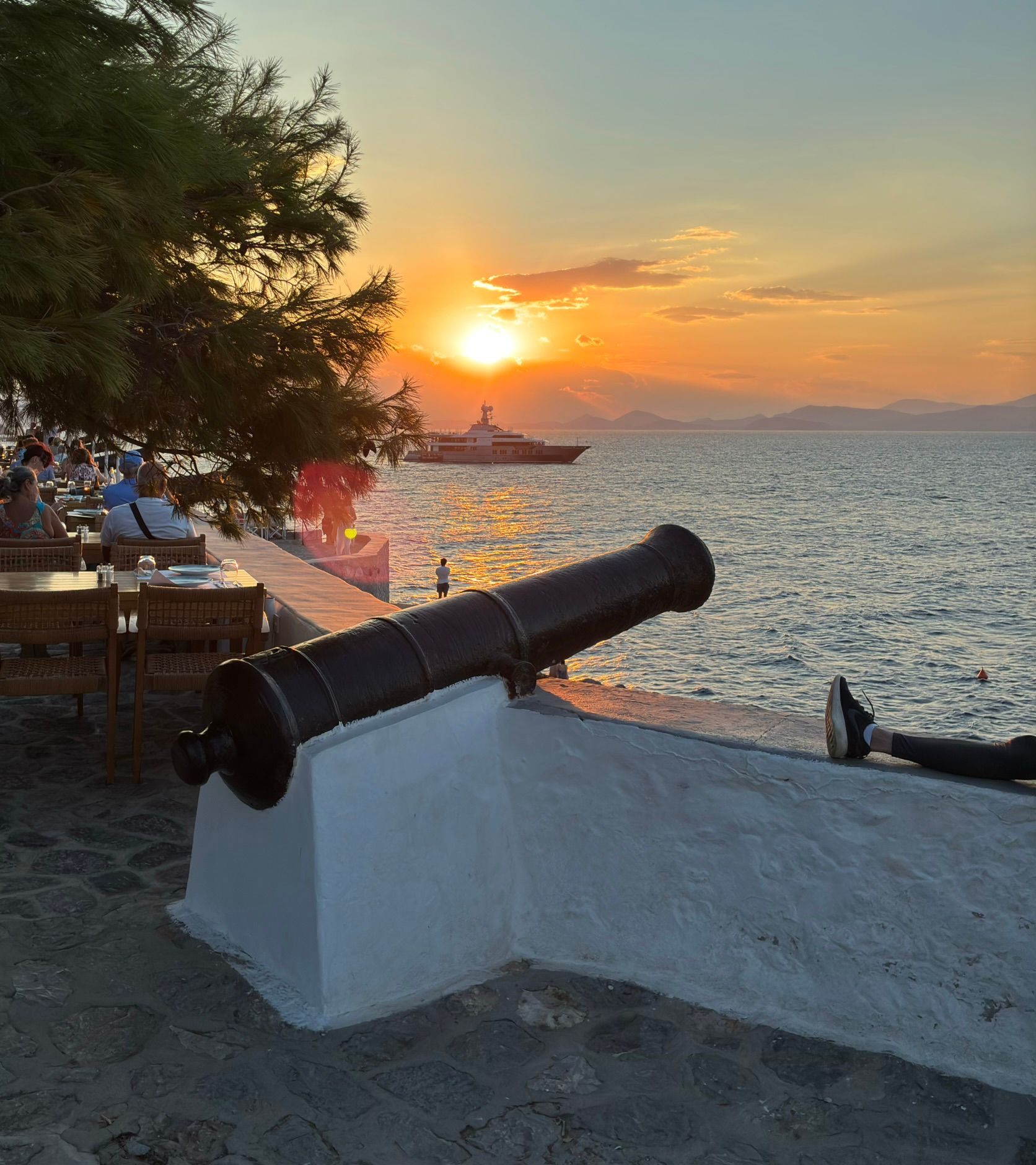
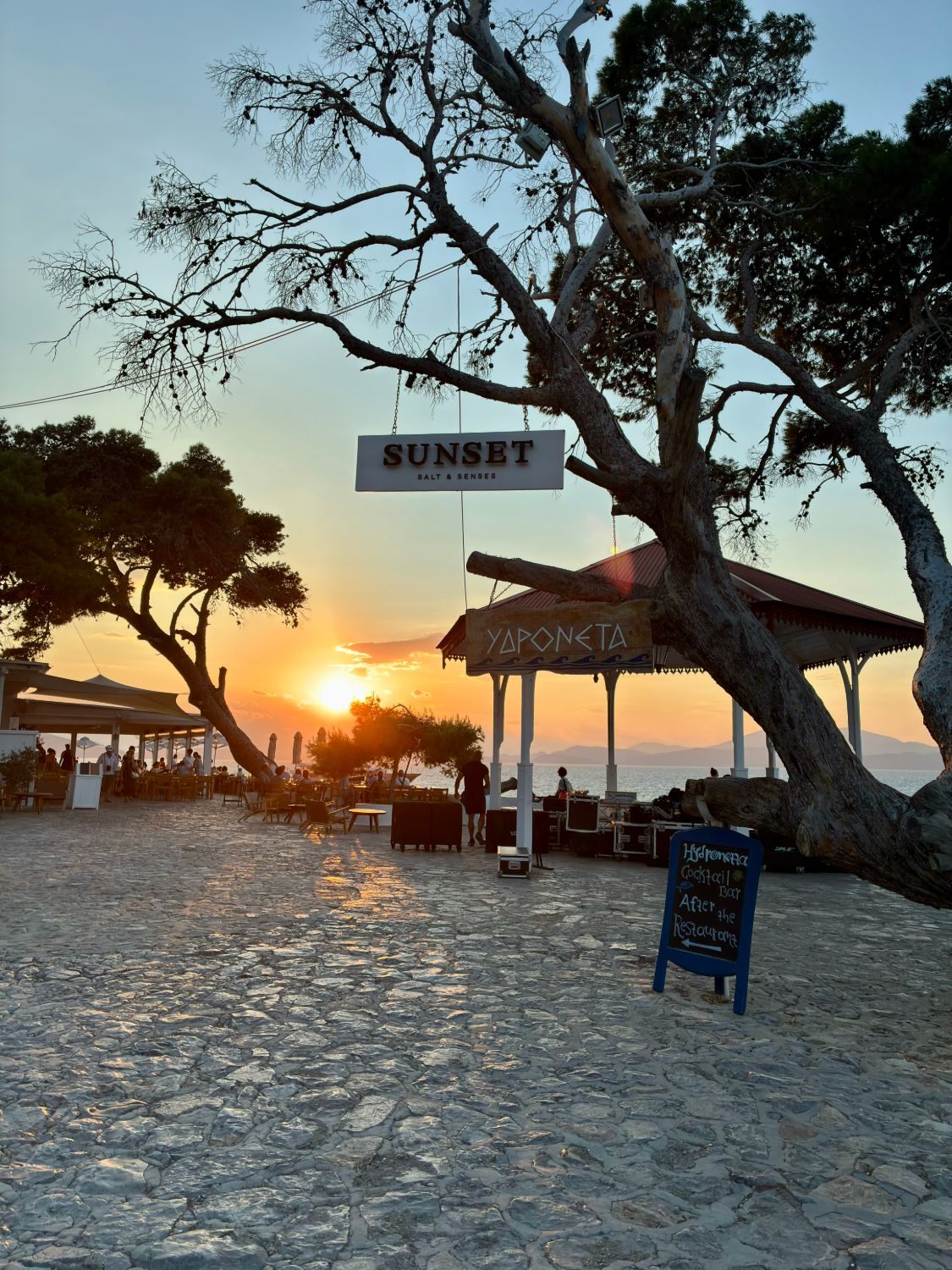
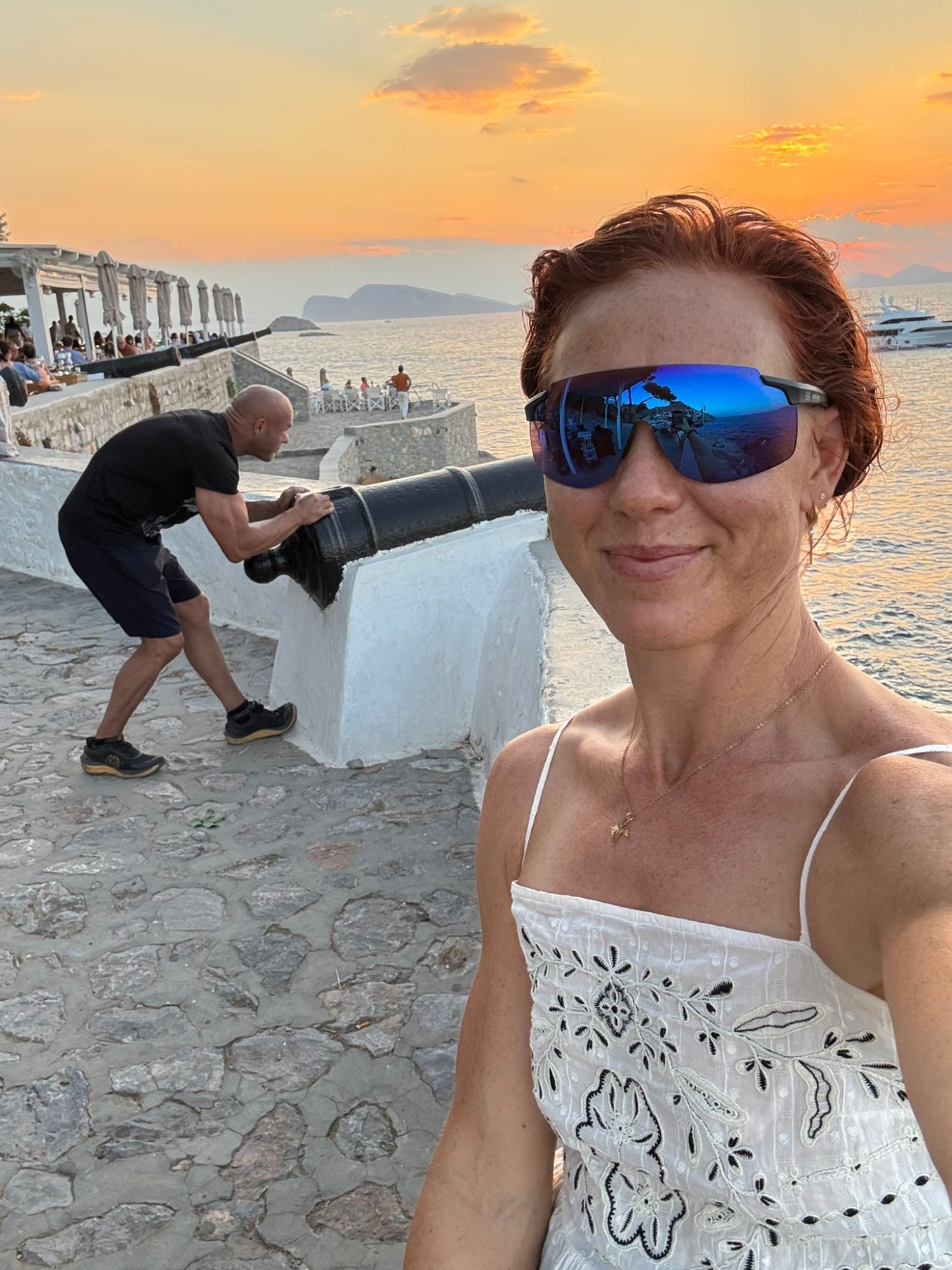
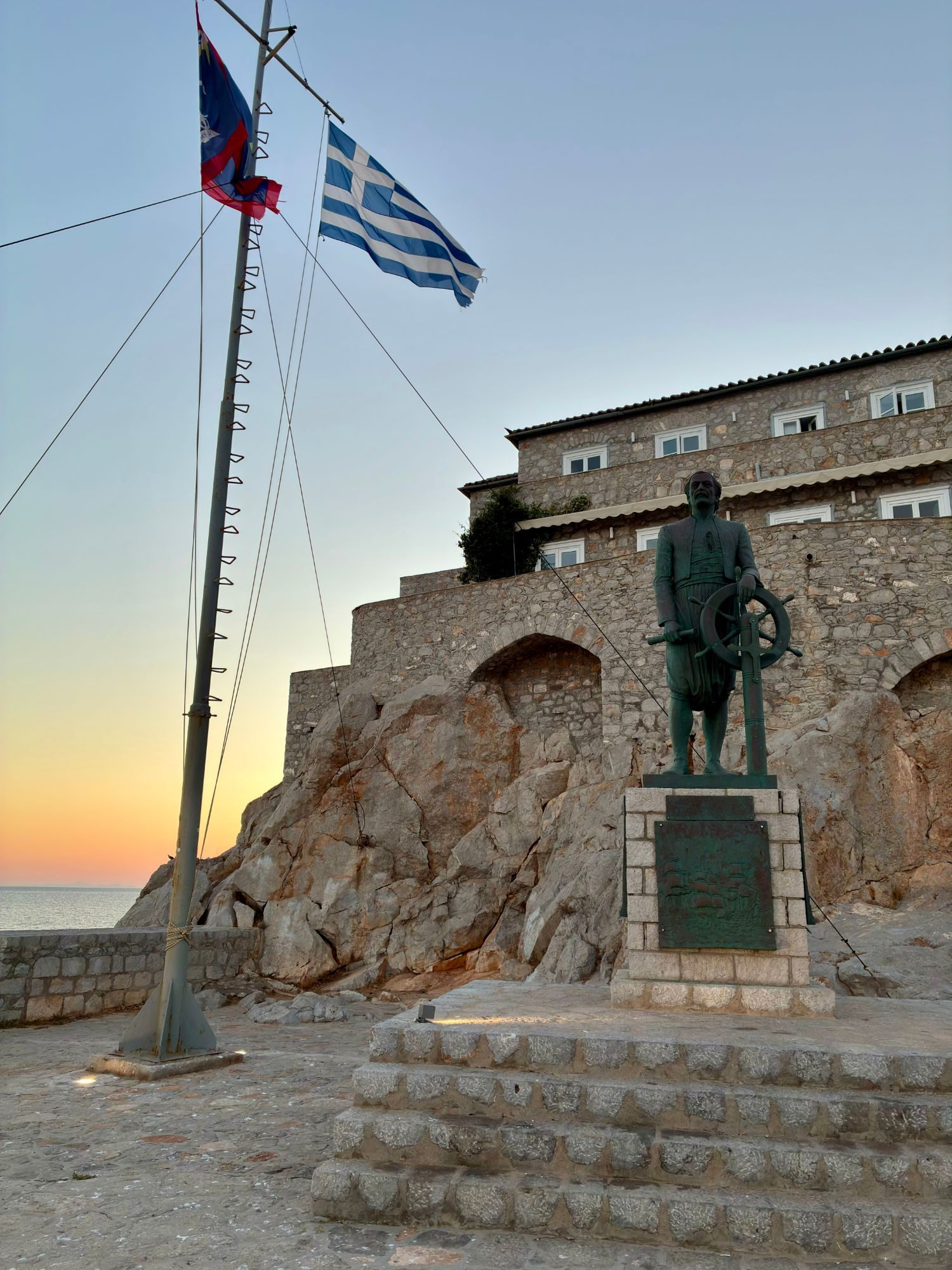
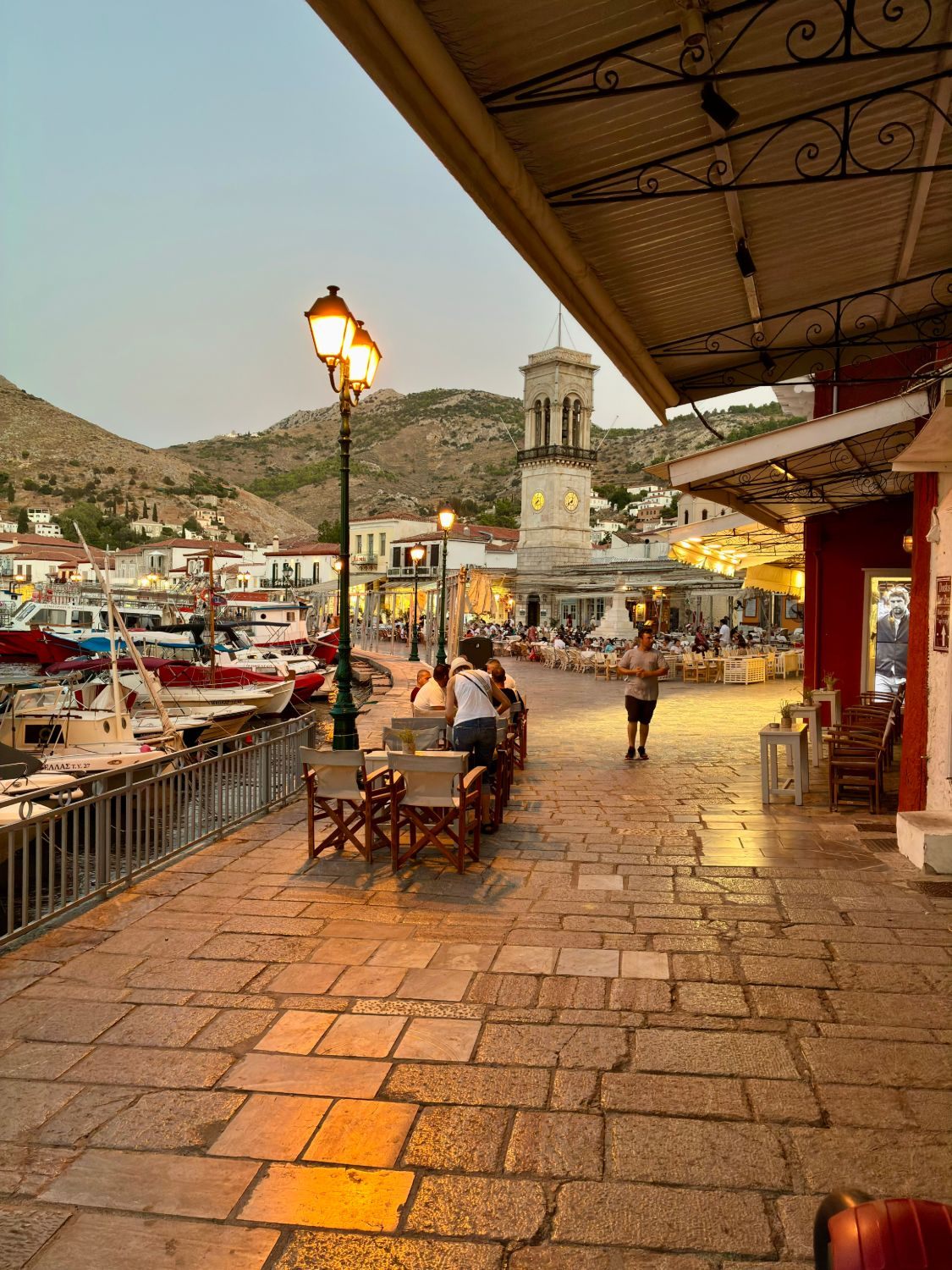
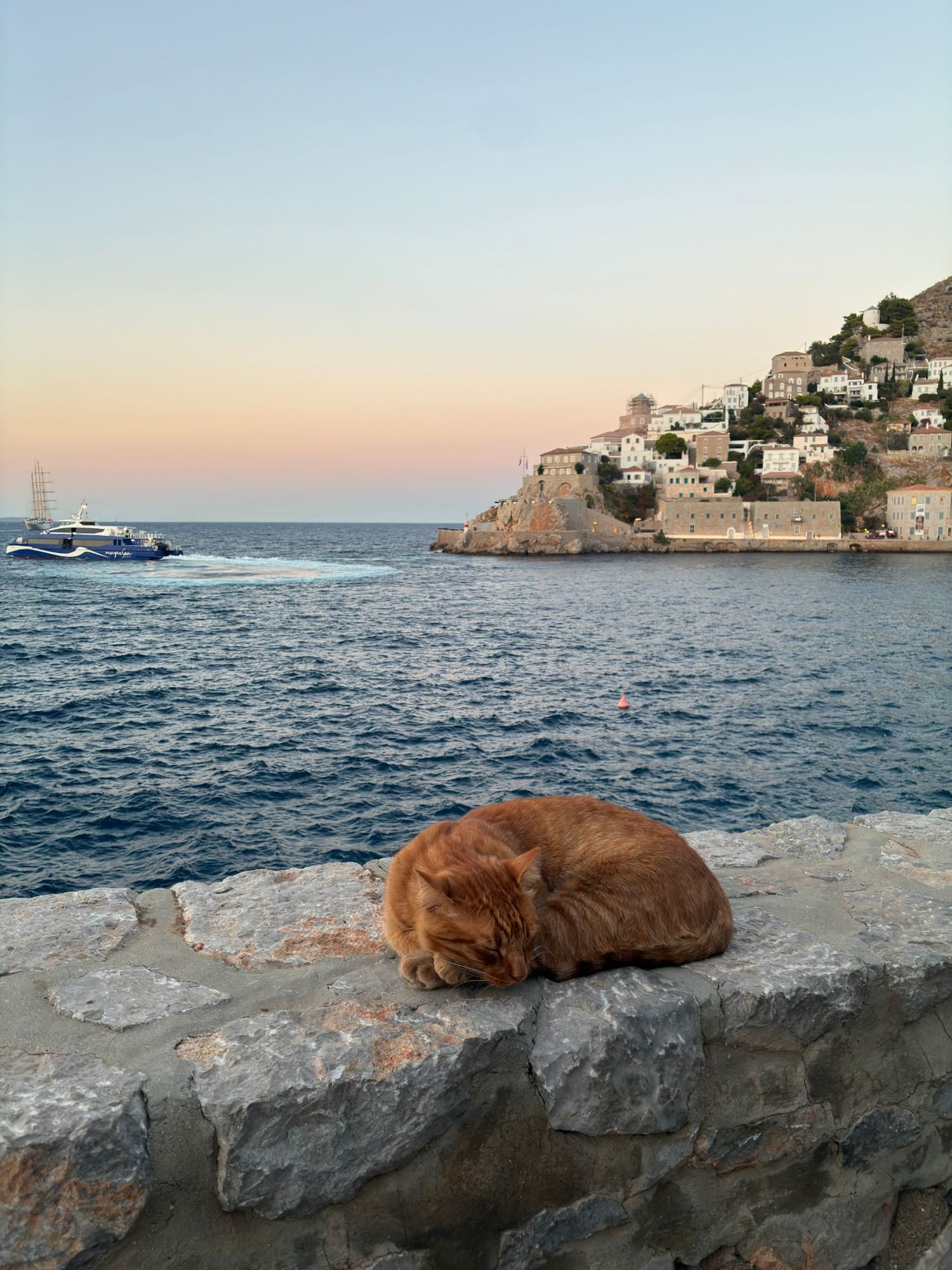
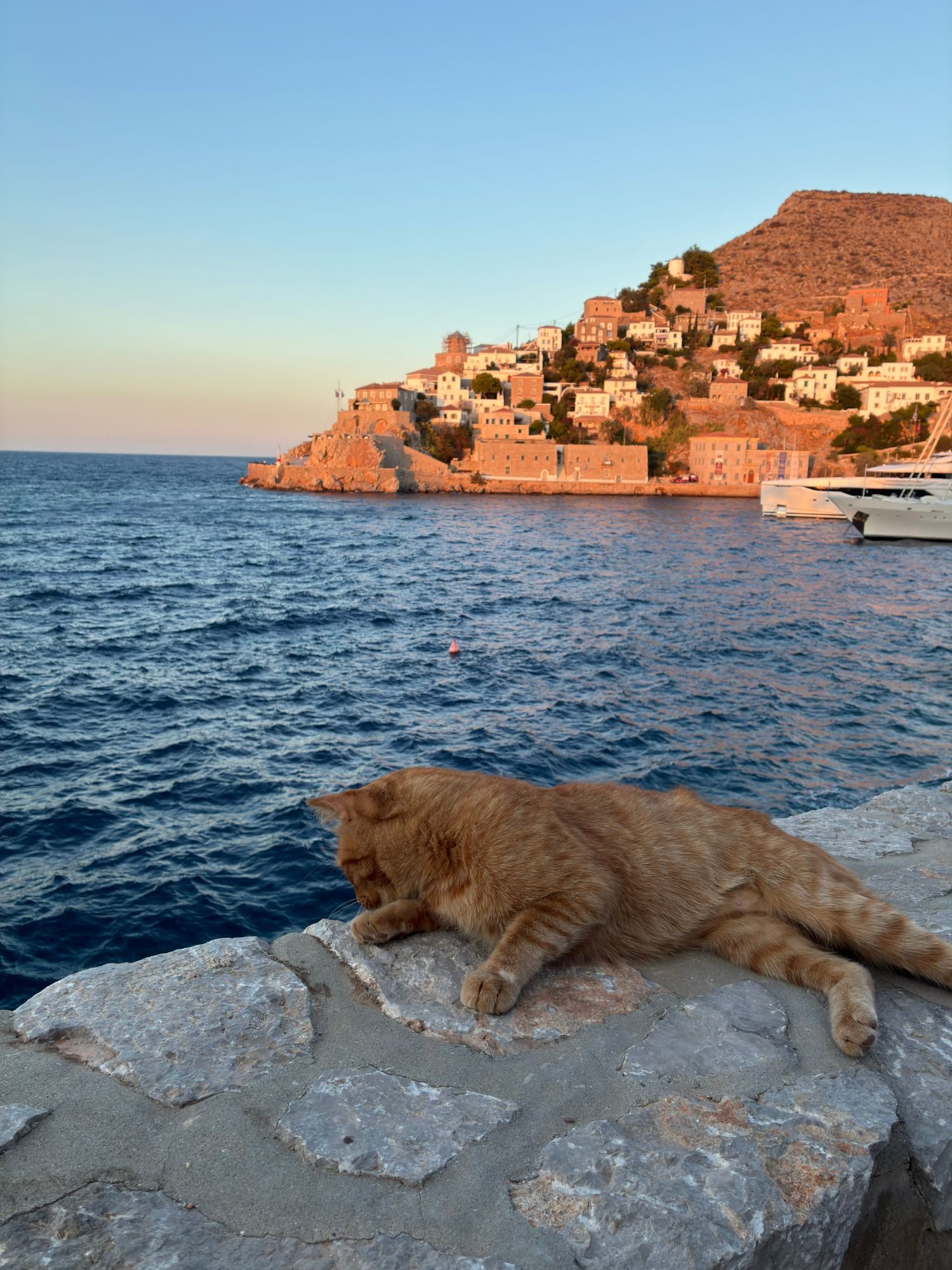
As the sun began to set, Hydra changed completely. The white houses and old stone streets were bathed in warm light, and the harbour filled up with people, restaurants and small boats. Hydra is beautiful during the day, but we actually found the town even more atmospheric in the evening.
We found a spot by the harbour where we could watch the sunset over the sea. It was one of those evenings when you don't need to plan anything. You just need to be there.
Cooking our own dinner
Even though Hydra has plenty of restaurants, we chose to shop at a local store and cook our own dinner back at our accommodation.
It's something we like to do when we travel. We don't need to eat out every night – sometimes buying local ingredients, heading back to where you're staying and making your own meal is just as enjoyable. After a full day on our feet, it was a lovely way to end the day.
Hydra after dark
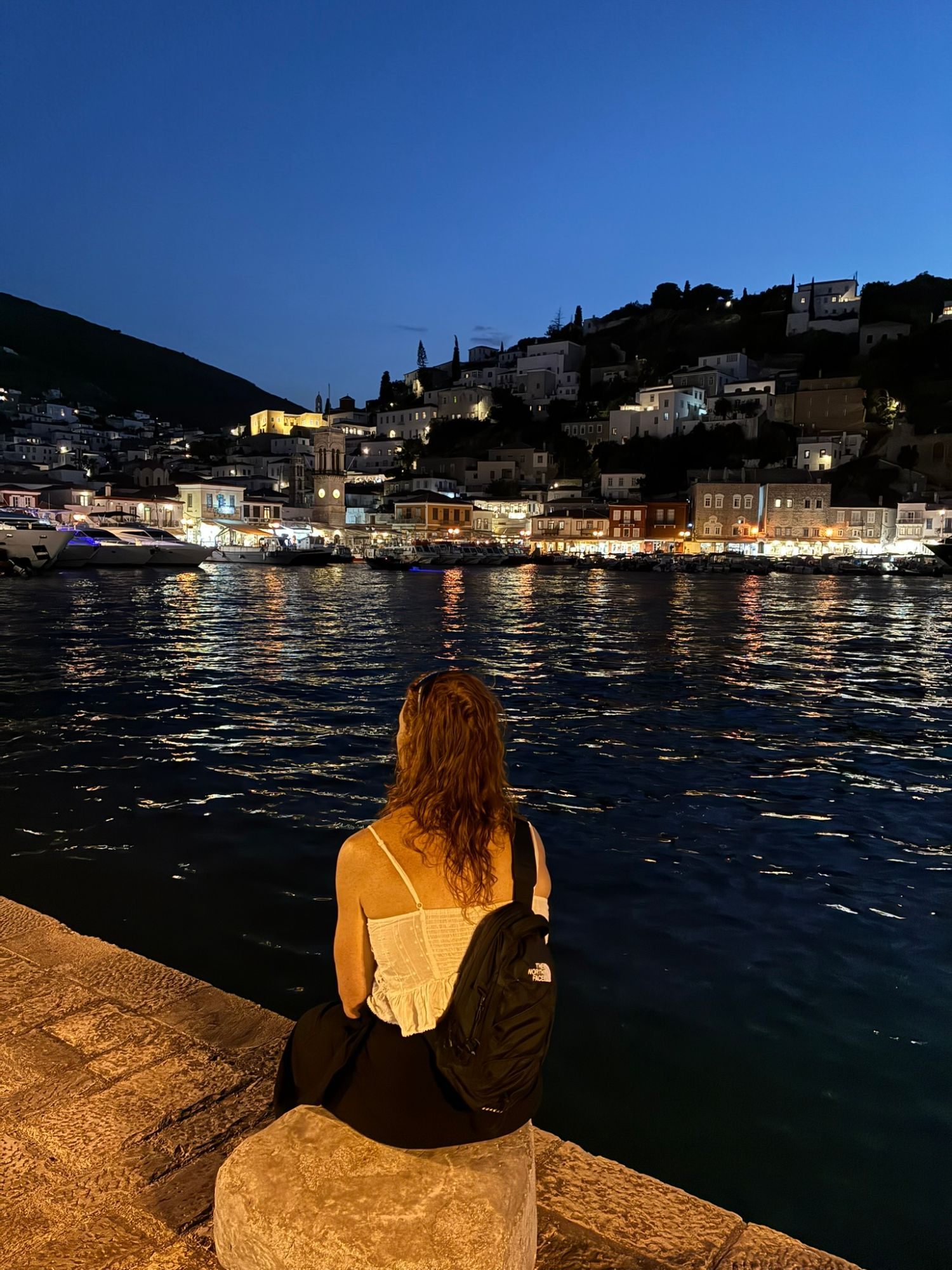
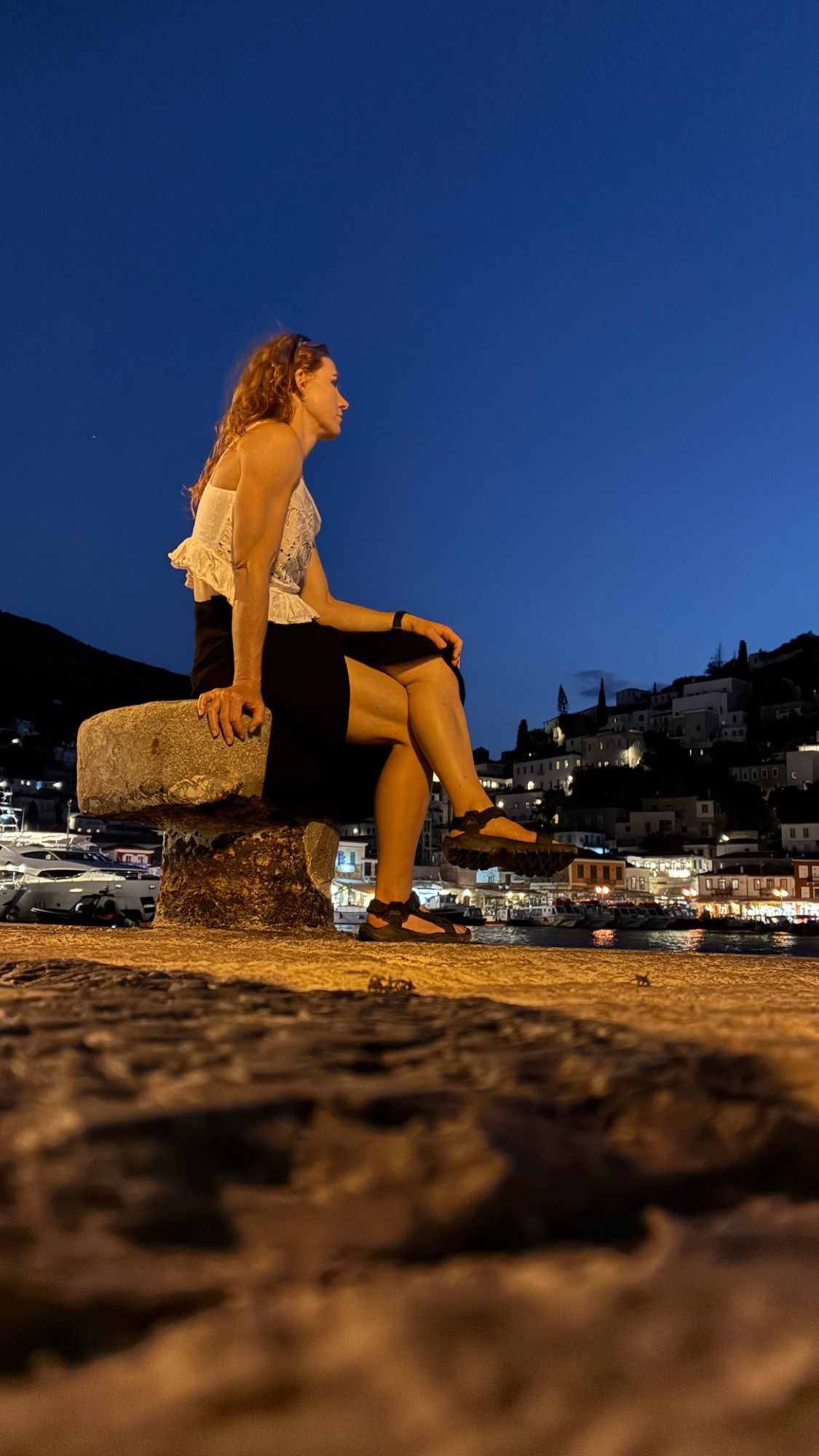
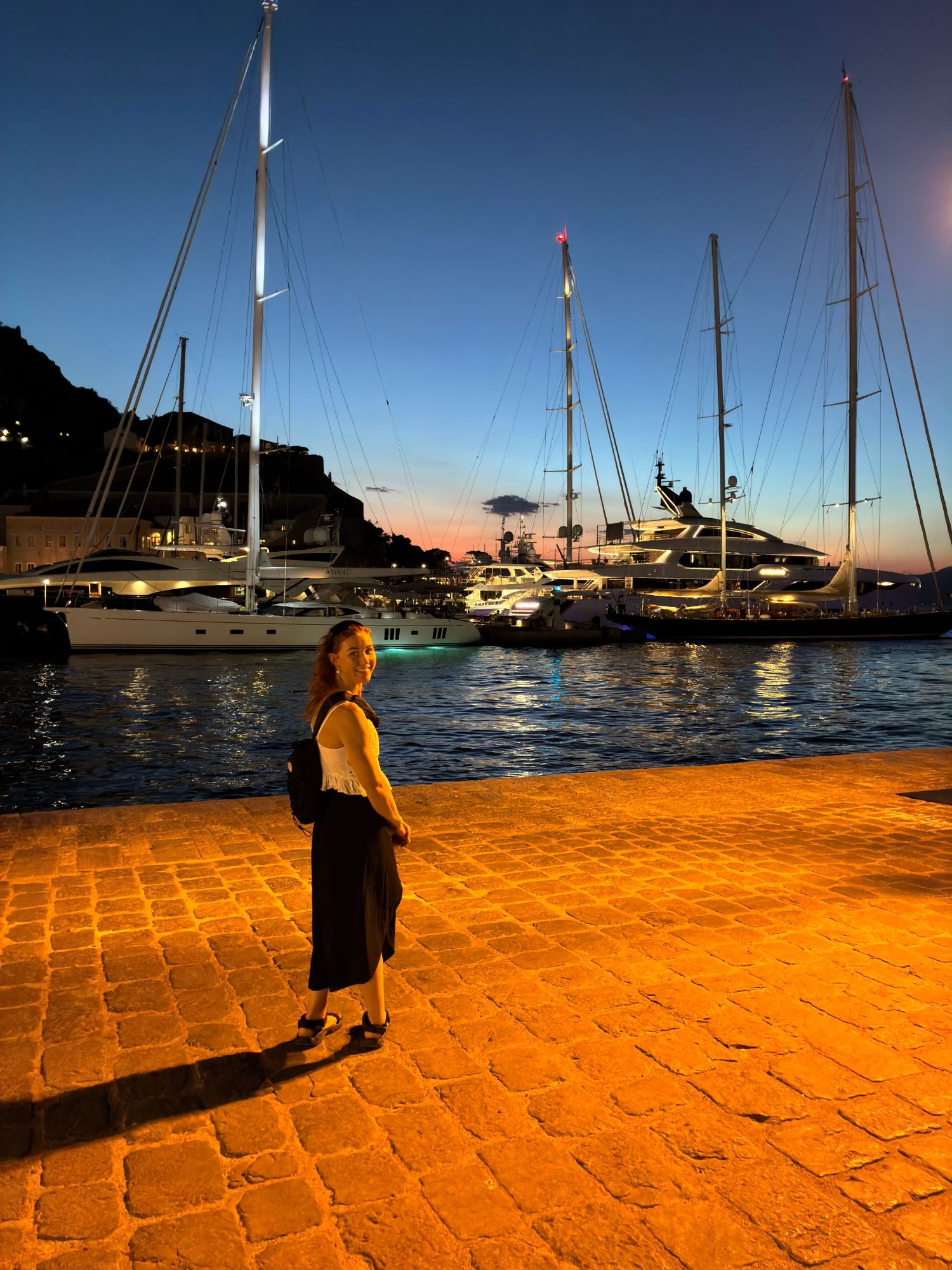
After nightfall, we took one more walk through Hydra Town. The town was still alive: restaurants were full, people strolled along the harbour, and donkeys still stood among the old cobbled lanes. Behind the town, the mountains rose dark against the night sky.
It was hard not to keep stopping to take photos. Hydra has a very special atmosphere, squeezed as it is between the sea and the mountains.
Is one night on Hydra enough?
The next morning, it was time to leave. We took the 07:30 ferry back to Piraeus (the AERO 4 HIGHSPEED, arriving at 09:20), walked to the car park, picked up our rental car and continued our road trip into the Peloponnese.
So, was one night on Hydra enough? For us, the answer is yes.
Not because we saw the whole island – we certainly didn't. If you want to hike more of Hydra, explore other parts of the coast or simply spend a few days relaxing, you could easily stay longer.
But for us, one night worked perfectly. We experienced Hydra without rushing. We walked the coast. We found an almost deserted swimming spot. We ate moussaka by the water. We saw the donkeys in the old streets. We watched the sunset. And we had twenty-four hours at a completely different pace from Athens.
Our experience of Hydra
Hydra wasn't a place where we tried to tick off as many sights as possible. We didn't arrive with a long list. We went to experience the island – and we did.
For us, Hydra became a small pause in the middle of our road trip through Greece. A day without a car. A day with the sea close by. A day of walking, swimming, good food and plenty of time to just wander.
Maybe that's exactly why we liked it so much. Some destinations you remember for their big sights. Others you remember for their atmosphere. For us, Hydra was the latter.
Practical information
| When we went | 4–5 September 2026 |
|---|---|
| Ferry out | Hellenic Seaways AERO 5 HIGHSPEED, Piraeus 08:30 → Hydra 09:45 (1 hr 15 min), €42 per adult |
| Ferry back | Hellenic Seaways AERO 4 HIGHSPEED, Hydra 07:30 → Piraeus 09:20 (1 hr 50 min), €32 per adult |
| Booking | Ferryhopper – online check-in required, 48 to 2 hours before departure |
| Parking in Piraeus | Underground car park at Karaiskaki Square, approx. 600 m on foot to the ferry |
| Where we stayed | Haven, approx. 1 km uphill from the harbour – booked through Booking.com |
| Getting around | On foot – Hydra is car-free |
| Coastal walk | Hydra Town → Vlychos (approx. 25 min) → past Taverna Marina → towards Agios Charalambos |
| Swimming | A small, quiet rocky spot beyond Vlychos – no sand, no facilities |
| Where we ate | Taverna Marina, by the water near Vlychos |
Our advice
- Good walking shoes: Hydra is all stone steps, hills and coastal paths.
- Water shoes: essential if you want to swim from the rocky coastline.
- Pack light: you'll be carrying your bags up the hill unless you stay by the harbour.
- Keep walking: the quietest swimming spots are beyond the busy beaches.
- Stay for the evening: Hydra Town is at its most beautiful at sunset and after dark.
Book your visit
Continue the journey
Back on the mainland, we collected the car in Piraeus and finally set off on the road: across the Corinth Canal to Sparta, ready for the Mount Taygetos hike. See the whole route in our 9-day Peloponnese road trip itinerary.